
Strategic Planning for Family Enterprises
Strategic Planning for Family Businesses and Family Offices
Every successful family business and family office benefits from a clear strategic plan, an intentional framework that defines the family’s vision, priorities, and long-term goals. Strategic planning helps families align leadership, prepare the next generation, and ensure the enterprise evolves thoughtfully as circumstances change. Big Canyon Advisors works with families and their advisors to develop strategic plans that provide clarity, direction, and continuity across generations.
What is Strategic Planning for a Family Business?
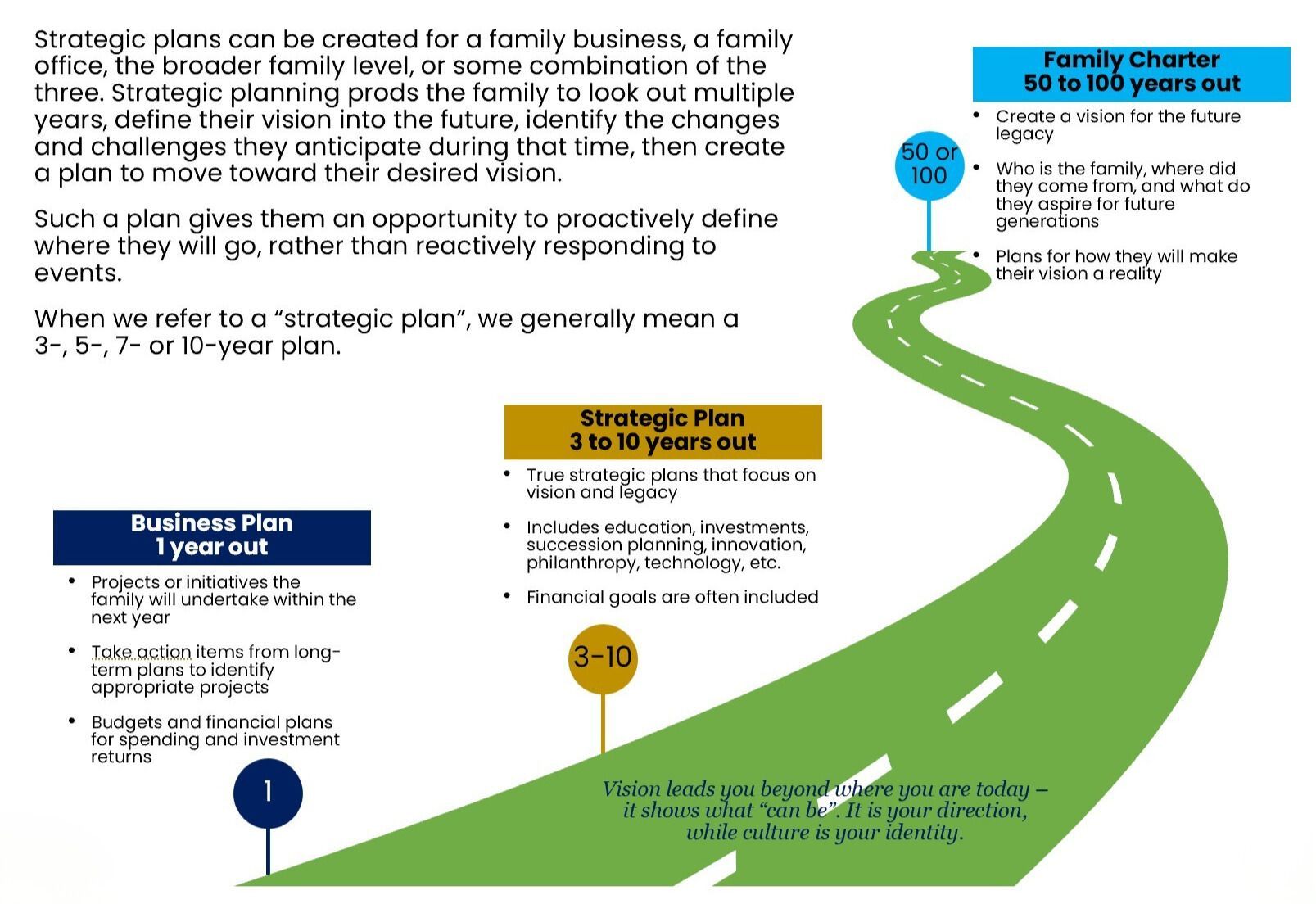
Strategic planning is a structured process that helps a family business or family office define its long-term vision, establish priorities, and align family members and key stakeholders around a shared direction. Unlike a business plan, which focuses primarily on operations and execution, a strategic plan addresses broader questions about growth, governance, leadership, ownership, succession, and the future of the family enterprise.

Why Strategic Planning Matters for Family Enterprises
Family enterprises often operate successfully for years without a formal strategic plan. Over time, however, growth, generational change, and increasing complexity make it important to step back and define a shared direction.
A well-developed strategic plan helps families clarify priorities, align leadership, and create a roadmap for sustainable growth.
When Strategic Planning is Especially Valuable
The strategy has always lived in the founder's head
The family business has become successful under the vision of a founder or long-time leader, but much of the strategy has never been formally articulated.
As leadership expands or the next generation becomes involved, it's time to create a shared strategic plan that clarifies where the business is going, establishes priorities, and gives future leaders a meaningful voice in shaping what comes next.
The family enterprise is at an inflection point
A significant change is approaching such as rapid growth, a leadership transition, a liquidity event, a new generation coming of age, or a shift in the family's priorities.
Strategic planning creates an opportunity to step back from day-to-day decisions, consider what the family wants the enterprise to become, and establish a clear direction for the next five to ten years.
The family office needs a clearer direction
The family office has evolved as the family's wealth, businesses, investments, and needs have grown, but its priorities may no longer be clear.
A strategic planning process can help family members and leadership define the office's purpose, determine where it should focus its resources, establish priorities, and ensure it continues to support the family's long-term vision.
It's time to refresh the strategic plan
The family business or family office has a strategic plan, but circumstances have changed or the plan simply isn't guiding decisions the way it should.
Revisiting the plan gives family members, leadership, and key stakeholders an opportunity to reassess assumptions, clarify priorities, address new opportunities or risks, and develop an actionable path forward.

Our Strategic Planning Process
Each engagement varies somewhat to match the family office and the family that it supports. A typical family office strategic planning process is outlined below.
- Understand the Family’s Vision and Goals
Clarify long-term aspirations for the family enterprise or family office. - Assess Current Position and Opportunities
Evaluate the current structure, leadership, and growth opportunities. - Engage Family Members and Advisors
Ensure that key stakeholders contribute perspectives and priorities. - Develop the Strategic Framework
Define priorities, initiatives, and decision-making principles. - Create a Clear Path Forward
Establish actionable steps and a roadmap for implementation.
Strategic Planning FAQ's
How is strategic planning different from a business plan?
A business plan typically focuses on day-to-day operations and execution. Strategic planning addresses broader questions about vision, priorities, growth, governance, leadership, ownership, and the future direction of the family enterprise.
How often should a family business update its strategic plan?
Many families review their strategic plan annually and undertake a more comprehensive update every three to five years or following significant changes in leadership, ownership, or business conditions.
Who should participate in the strategic planning process?
Participation depends on the family and business, but it often includes business leadership, family owners, board members, and other key stakeholders.
How do you help families build consensus?
We facilitate structured discussions that encourage collaboration, clarify priorities, and help family members work toward shared objectives.
Does strategic planning include succession planning?
Succession planning is often an important component of a strategic plan because leadership transitions have long-term implications for both the business and the family.
Can strategic planning help resolve family disagreements?
While strategic planning is not conflict resolution, a structured planning process often improves communication, creates shared expectations, and helps families make decisions together more effectively.
Begin the Conversation
Strategic planning is often most valuable at moments of transition, when leadership is changing, the next generation is becoming involved, or the enterprise is entering a new phase of growth.
If your family business or family office is considering how to clarify its long-term direction, we welcome a confidential conversation.