

Does your business have traditions, customs or policies?
By Charlie Carr, CFP®
Traditions in a family business are a great thing. Recreating grandma’s dressing recipe at Thanksgiving, celebrating the founding of the business, or recognizing every employee’s birthday the same way that the founder did are traditions that should be continued. These are NOT the traditions we are discussing in this article.
We’ve seen this scenario too many times: Grandpa started the business, but now his children are running it, and tensions are growing. The grandkids are coming into the picture, and they’re frustrated. Family members argue about spending decisions, staff management, and strategic direction. It’s still profitable, but is it sustainable for the next generation?
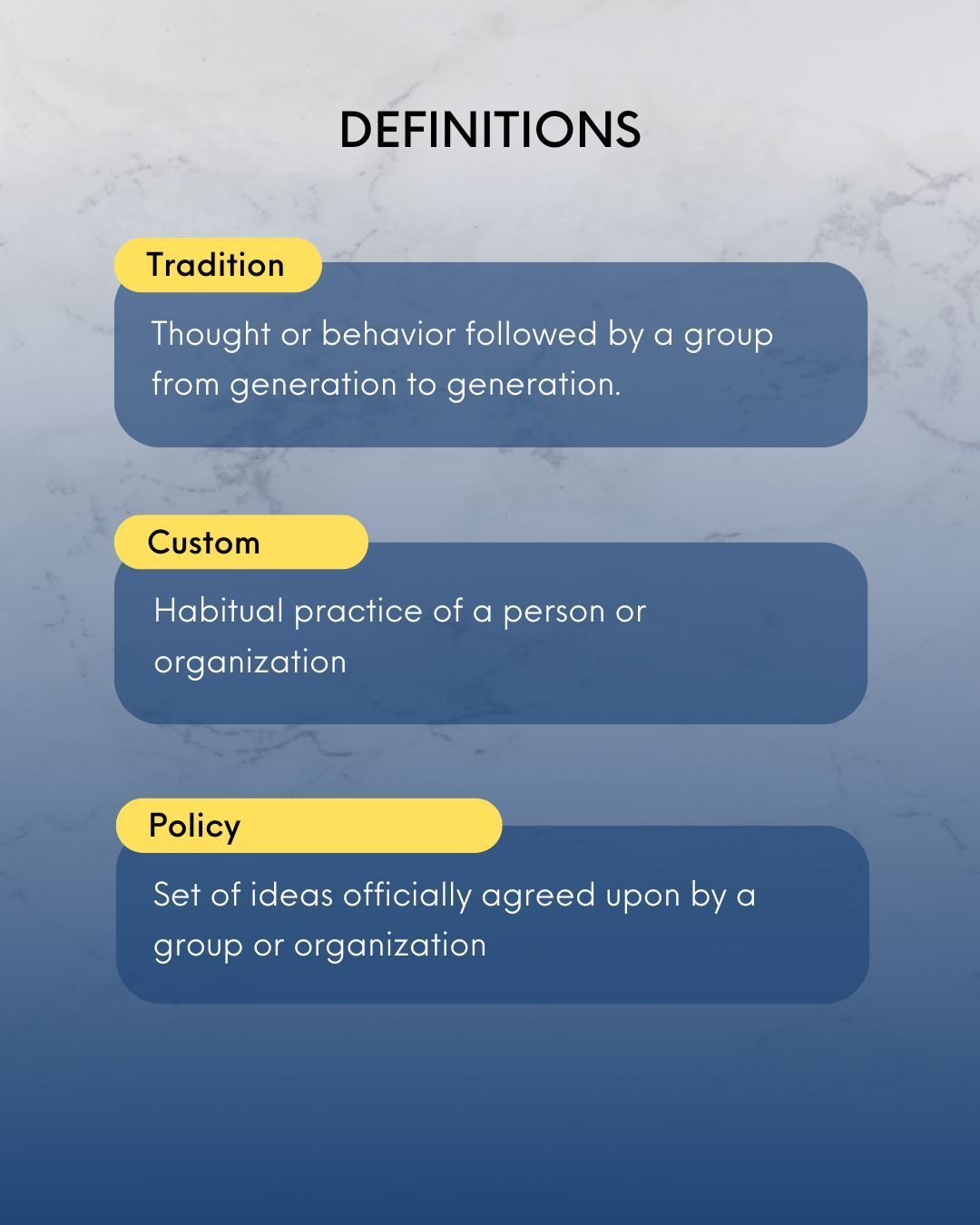
The older generation tells us that the business has strong and enviable human resources policies. However, employees tell us they haven’t received a performance review in years. One family member says the business’ expense management is very strong, while his sister complains that he spends three times as much on his company credit card as she does. Two siblings are actively undermining an employee because they think she should never have been hired – their brother hired her without consulting anyone else.
Every business operates on a variety of business policies. Ideally, those policies have been thought through, written down, and are practiced consistently. However, we often find that in family businesses, those policies are really customs: we think this is how they work, they aren’t consistent, and they definitely are not written down. If we’ve done this across generations, then they become traditions, but they aren’t documented or consistently followed, so they have not become real policies.
We see variations of this often, sometimes before the problem becomes a crisis, and sometimes when the crisis is full-blown. While communication, leadership, and governance issues certainly need attention, one major issue is the reliance on customs rather than formal policies.
Why do Customs or Traditions Fall Short in Business?
You might think, “What’s the problem? We’re a family business, and traditions are what make us special.” While traditions are important for celebrations and culture, when they replace formal, clear business policies, problems arise. Here's why relying solely on traditions can be risky:
- Inconsistency: Without policies, practices can be inconsistent. One division might approve team lunches, while another prohibits them. One family member may hire staff after a brief chat, while another insists on thorough background checks. Inconsistent approaches confuse both employees and customers, creating friction and inefficiency.
- Undefined and Shifting Traditions: Traditions are rarely clearly defined, and as a result, they can change over time—or worse, change depending on circumstances. Two siblings might justify their actions with stories about their father. One recalls a time when their father fired a vendor for poor behavior, while the other recalls a similar instance where a vendor was retained. This lack of clarity results in conflicting actions that can drive confusion and create tension.
- Misalignment with Reality: What we think of as “tradition” may not actually reflect the way things are done. We’ve had family business owners describe their vacation policies, which were completely different from what their employees describe. Misaligned expectations lead to frustration and conflict, and over time, the business suffers.
- Lack of Strategic Intent: Traditions often develop organically, but that doesn’t mean they’re well thought through. Just because something has always been done one way doesn’t mean it’s the most effective or best approach. Business policies are designed with intention, carefully crafted to align with the company’s goals, mission, culture, and long-term strategy.
- Practices conflicting with our values: Because the business practices are not consistent and documented, there is a greater danger that those practices do not match the intended values of the business and its owning family.
While traditions are important for celebrations and culture, when they replace formal, clear business policies, problems arise.
The Cost of Not Having Policies
These inconsistencies lead to real-world issues: legal risks, HR problems, family squabbles, employee confusion, and eventually, lower financial performance. Without clear policies, your business is exposed to unnecessary risks, and the lack of structure makes it difficult to operate efficiently.
The Benefits of Having Clear Policies
Creating formal, written business policies helps a business avoid the pitfalls listed above. Here’s why:
- Consistency: Policies ensure that everyone in the business is following the same guidelines. This brings stability and makes operations run more smoothly.
- Clear Communication: Well-defined policies clearly communicate expectations from the controlling generation to the staff and future generations. Everyone is aligned, and there’s less room for confusion.
- Risk Mitigation: Policies help you avoid legal challenges. For example, if you clearly define your hiring practices and follow them consistently, you reduce the risk of discrimination claims. The same goes for financial practices, expense management, and other areas of the business.
- Flexibility with Accountability:
You can build flexibility into policies by defining provisions and exceptions. But having a clear process for approving exceptions helps keep the company accountable and transparent.
What Types of Policies Should You Have?
If you’re ready to implement policies in your business, there are several areas where they can make a significant impact:
- Hiring Practices: Ensure you have a consistent and fair approach to hiring that includes clear qualifications, interview processes, and background checks.
- Performance Reviews: Establish a system for providing regular, constructive feedback and measuring employee performance.
- Expense Processes / Reimbursements: Create clear guidelines for how expenses are handled, including approvals, limits, and reimbursement procedures.
- Budgeting / Financial Planning: Develop formal processes for budgeting, forecasting, and tracking financial performance to avoid overspending and mismanagement.
- Strategic Planning: A clear, documented strategic plan helps you align everyone with the future direction of the business and gives your family a roadmap to follow.
- Cybersecurity Practices: In today’s digital age, clear cybersecurity policies are essential. Define acceptable usage of public Wi-Fi, data handling procedures, password usage, and other security practices to protect sensitive information.
- Social Media Usage: With the prominence of social media, set clear guidelines for how employees represent the company online.
- Record Retention: Create policies for how long records are kept, what gets archived, and how documents are disposed of when they’re no longer needed.
- Board Practices: Document how your board operates, including the decision-making process, member roles, and meeting structures. This is helpful for both advisory and fiduciary boards.
The Importance of Policies for Long-Term Success
In family businesses, especially those transitioning from one generation to the next, establishing formal policies is critical for maintaining stability, reducing conflicts, and ensuring long-term sustainability. By implementing policies, you’re creating a foundation for success that can withstand challenges and adapt to the future. Policies guide how decisions are made, how employees are treated, and how the business operates on a day-to-day basis.
As the business evolves, so should its policies. But at every stage, it’s vital to ensure that these policies are clear, consistent, and aligned with your company’s values and goals. By doing so, you’ll provide the structure and direction needed for your business to thrive for generations to come.
Charlie Carr, CFP® is president of
Big Canyon Advisors, LLC, which advises family businesses and family offices.